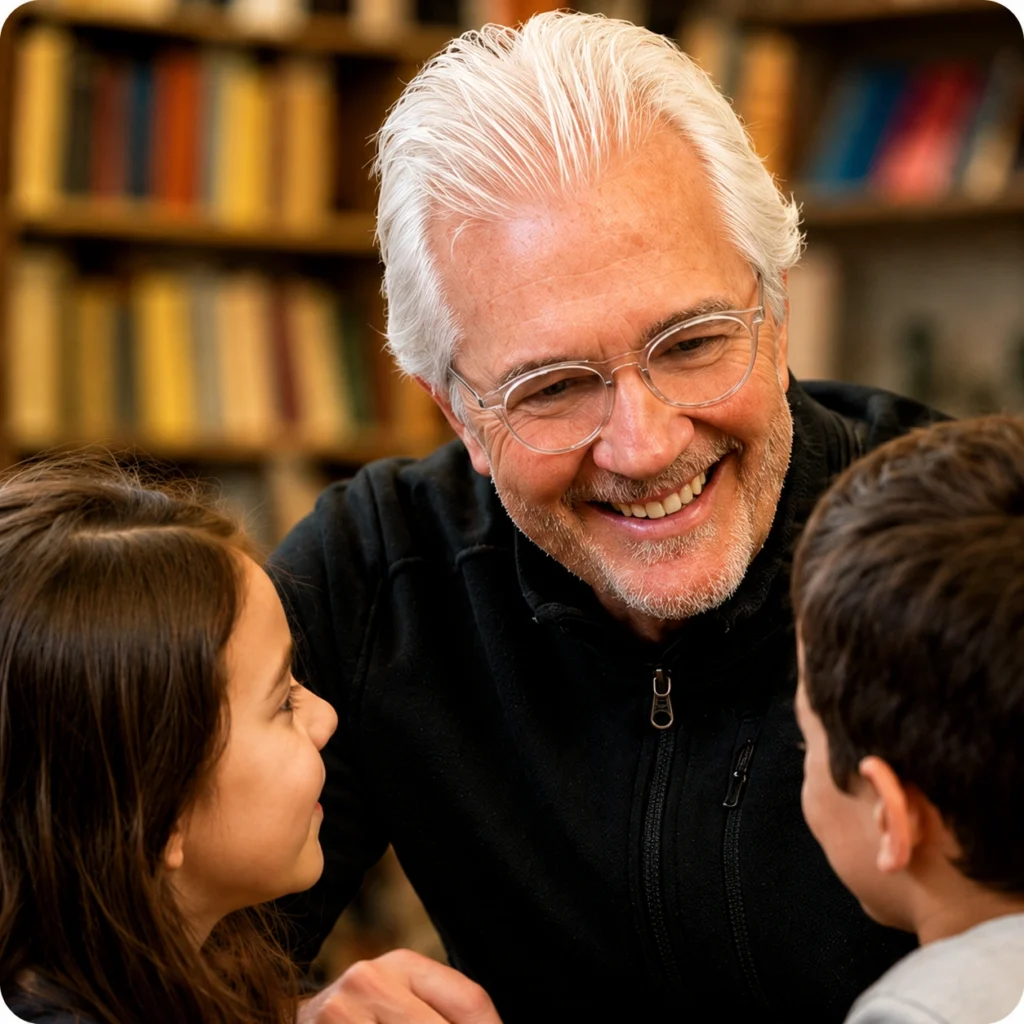

For more than three decades, I’ve created books, television programs, and educational media for children.
Along the way, I’ve sat in countless meetings where adults debated what children needed to know. We talked about curriculum, vocabulary, literacy, educational objectives, and the messages we hoped children would remember.
But I kept coming back to a different question:
Why would a child care?
It sounds simple. But after all these years, I believe it’s one of the most important questions we can ask when creating anything for children.
Attention Is Only the Beginning
Before children can learn something, they have to engage with it. But getting their attention is only the beginning.
A child can hear a word without really thinking about it. Read a paragraph without considering what it means. Watch an educational video while absorbing surprisingly little of what we hoped to teach.
Exposure is not the same as learning.
The challenge isn’t simply getting information in front of children. It’s giving them a reason to do something meaningful with it.
Give Children a Reason
So, before we create the next lesson, book, video, or learning experience, perhaps we should ask:
Why might this matter to a child?
The answer doesn’t have to be profound.
A vocabulary word can unlock a joke.
A math problem can solve a mystery.
A science lesson can explain something strange a child noticed in the backyard.
A historical event can become the story of a person faced with an extraordinarily difficult decision.
We haven’t changed what children need to learn.
We’ve changed their reason for wanting to know.
Caring Changes What Happens Next
Caring isn’t the end of learning. It’s often the beginning.
When something matters to a child, something changes. They lean in. They become curious. They ask questions. They begin connecting a new idea to things they already know and care about.
That’s the opportunity.
Good teaching can take it from there.
Because learning still requires practice. Children still need opportunities to think, remember, retrieve, and revisit what they’ve
learned. Caring doesn’t replace any of that.
It gives children a reason to begin.
One More Question
Educators and organizations creating for children already ask important questions:
What do we want children to know?
What do we want them to remember?
What do we want them to do?
I’d add one more:
Why would a child care?
Because when we help children discover what is surprising, useful, funny, puzzling, beautiful, or meaningful about something worth learning, we create an opportunity for something powerful to happen.
We don’t just put information in front of children.
We give them a reason to lean in.